How to Create a Logo: A Complete Guide for Beginners
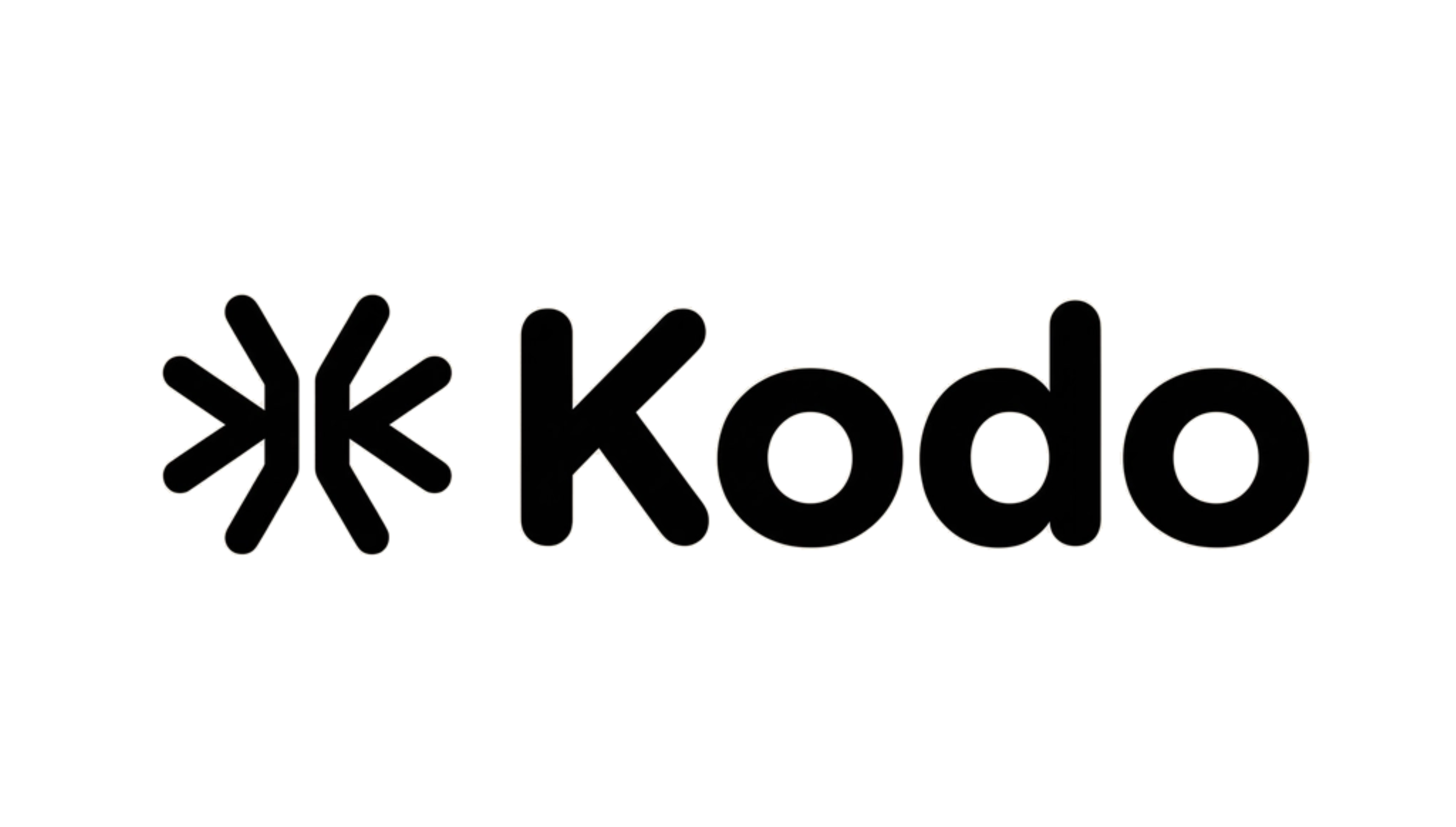
Creating a logo for Kodo taught me a lot about what makes logos work. Here's everything I learned, step by step.

I've designed three logos in the last year. My first one for Flowe AI was... well, it was okay. But by the time I got to Kodo, I'd learned the difference between a "symbol" and a "brand."
A logo isn't just a pretty picture. It's a shorthand for your entire company. If you're 13 like me and don't have a design degree, you have to be smart about how you build it. Here is my "beginner's roadmap" to logo design.
Step 1: The "Word Cloud" Method
Don't start with a pen. Start with words. When I was naming Kodo, I wrote down every word that described the product: fast, simple, precise, futuristic, friendly.
I circled "precise" and "friendly." That was my guide. Every design idea had to match those two words. If an idea was too friendly but not precise (like a hand-drawn doodle), I cut it. If it was too precise but not friendly (like a sharp, cold geometric shape), I cut it.
Step 2: AI as a Brainstorming Partner
The blank canvas is terrifying. I use Kodo's AI generator to get my first 50 ideas out of the way. I'll type in my "word cloud" keywords and see what it comes up with.
90% of what it generates isn't right, but that 10% is gold. It might be a specific curve of a letter or a way two shapes overlap. I take that 10% and start building manually. AI is for the "what," you are for the "how."
Step 3: Sketching (Yes, on Paper)
There is something about a pencil that makes your brain work differently. I sketch dozens of tiny logos. I don't care if they are ugly. I'm just looking for a shape that "feels" like Kodo.
The winner for Kodo was a simple "K" shape that also looked like a path tool. It was precise and tech-y, but the rounded corners made it friendly. Once I had that on paper, I knew I had it.
Step 4: Vectorize or Bust
Never, ever use a regular image (raster) for your logo. If you do, it will look like a blurry mess when you try to put it on a sign. You need vectors.
In Kodo, I built the pen tool and Boolean operations specifically so I could refine my own logos. I spent hours tweaking the anchor points until the curves were mathematically perfect. That's the difference between an amateur logo and a professional one.
Step 5: The "Black and White" Test
Colors are emotional, but they can also be a crutch. If your logo only looks good because of its colors, it's not a strong logo.
I always design in pure black and white first. If the shape is strong enough to work without color, then adding color will only make it better. If the shape is weak, no amount of gradients will save it.
Step 6: Typography Matters More Than the Icon
Sometimes your name is the logo (like Google or Coca-Cola). This is called a "wordmark." I spent more time picking the font for "Kodo" than I did on the icon.
I looked for a font that felt like it belonged in a high-end design tool. It had to be clean, modern, and have a bit of weight to it. Don't just use the default font. Tweak the spacing between the letters (the "kerning"). It's a tiny detail that makes it look 10x more professional.
Final Thoughts: Don't Be Afraid to Change
Your first logo won't be your last. I've already updated the Kodo logo once since we started. As the product evolves, the brand should too.
The most important thing is to just start. Don't wait for a $10,000 design budget. Start with a word cloud, an AI prompt, and a pencil. You'll be surprised what you can build.
Designing logos is one of my favorite parts of building Kodo. If you're stuck on a design, tag me on X (@mlg27_) and I'll take a look!